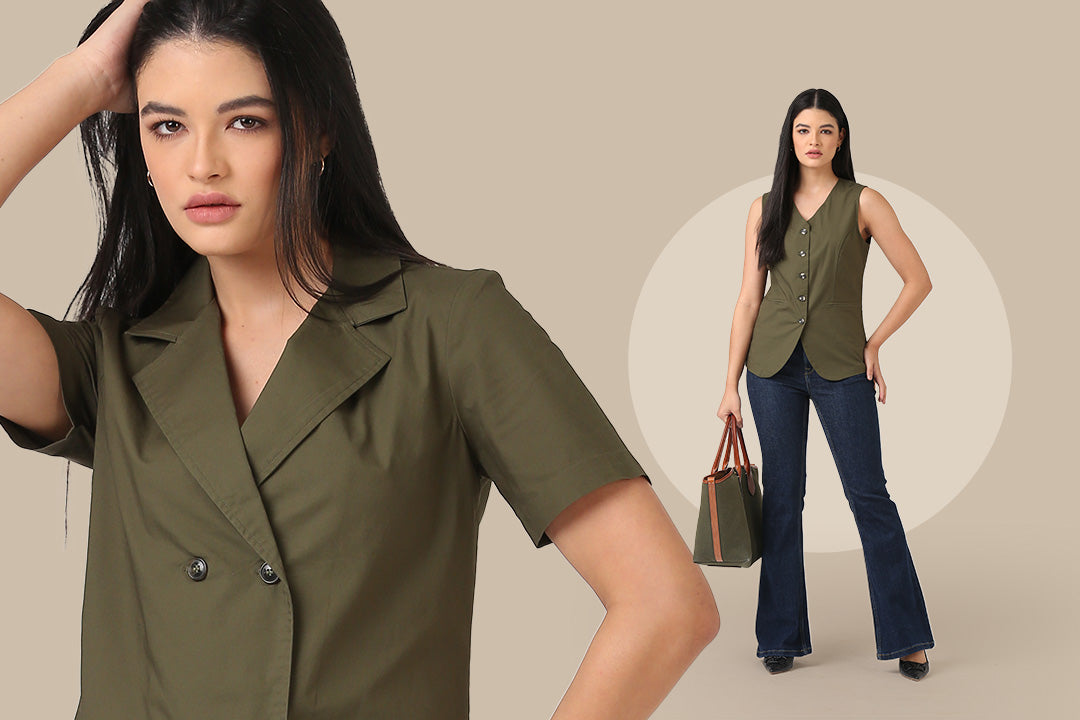
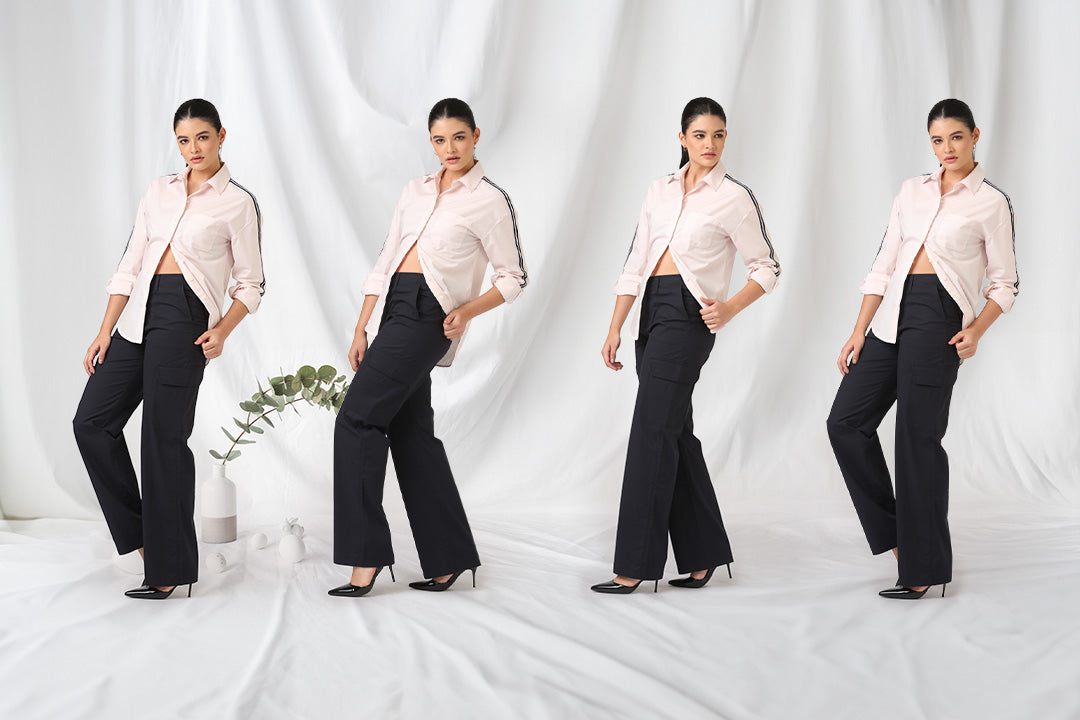
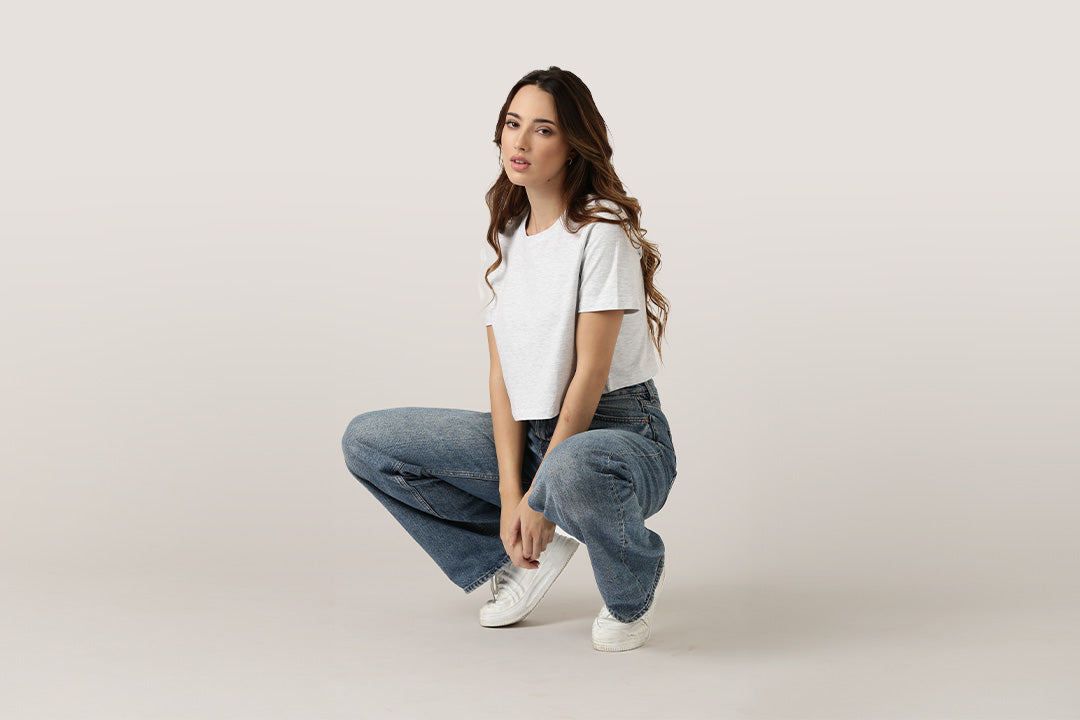
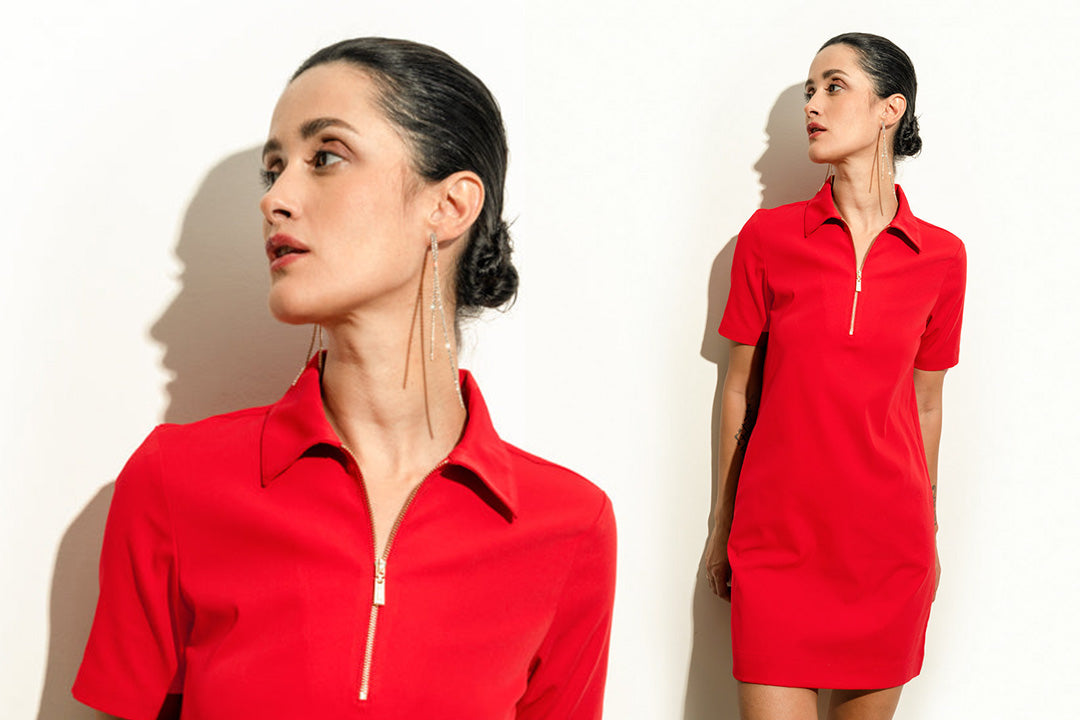


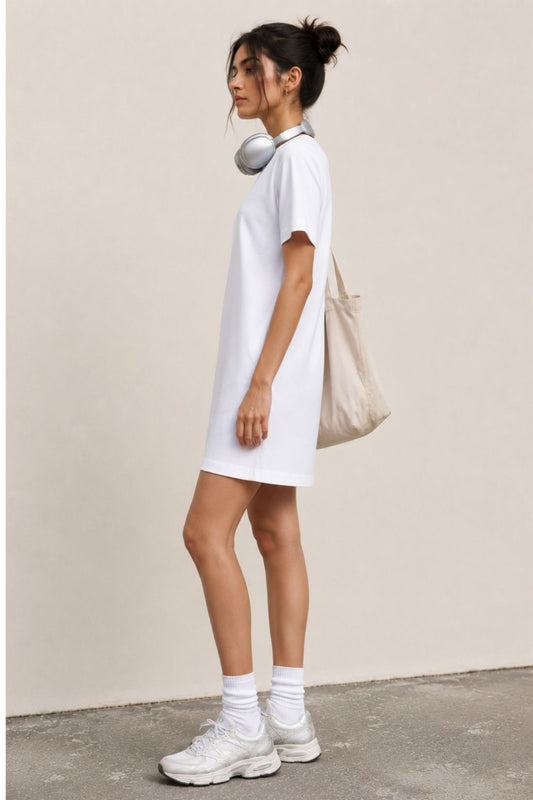

Most fashion brands start a design with a sketch. We start with a fabric swatch — and the difference shows up in how the finished piece actually feels to wear, not just how it looks on a hanger.
It Starts at the Yarn
Before a single stitch is cut, we're deciding on yarn composition — what percentage of cotton, what percentage of stretch fibre, how the yarn is spun. Our Soft Cotton Rib Collection, for example, is built on an in-house developed 96% cotton, 4% spandex 2x1 rib at 280 GSM — a specific combination chosen to balance breathability with enough stretch to hold a fitted silhouette.
That number — 280 GSM — isn't arbitrary. Lighter would feel flimsy in a fitted cut; heavier would lose the stretch recovery that makes the fabric comfortable for all-day wear.
Compacted Yarns, and Why They Matter
We use compacted yarns in several of our knit fabrics — a process that improves fibre alignment during spinning. In practical terms, this means less surface fuzzing over time and better durability through repeated washes, which is the difference between a garment that looks the same after six months and one that starts to pill.
The Finishing Process
Fabric development doesn't stop at the weave or knit. Our cotton rib pieces go through a double bio wash and silicon finish — a treatment that softens the surface, adds a subtle sheen, and improves how the fabric feels against skin, without compromising the fabric's structure.
Why This Process, Not a Faster One
It would be faster and cheaper to buy pre-made fabric off the shelf and build garments around whatever's available. We don't, because the fabric is the actual product — the cut and the styling are what make it wearable, but the fabric is what makes someone reach for it again in six months.
What This Looks Like Across the Catalog
The same fabric-first approach shows up whether we're working with linen (developed as blends that balance breathability with everyday durability), denim (chosen for weight and wash rather than just colour), or our cotton rib collection. The starting question is always the same: what does this fabric need to do, and does it actually do that.
Explore the Result
Explore the Full Jolene Collection →
You might also enjoy: Why Cotton Rib Fabric Feels Better Than Polyester Rib and Why Fabric Matters More Than Trends